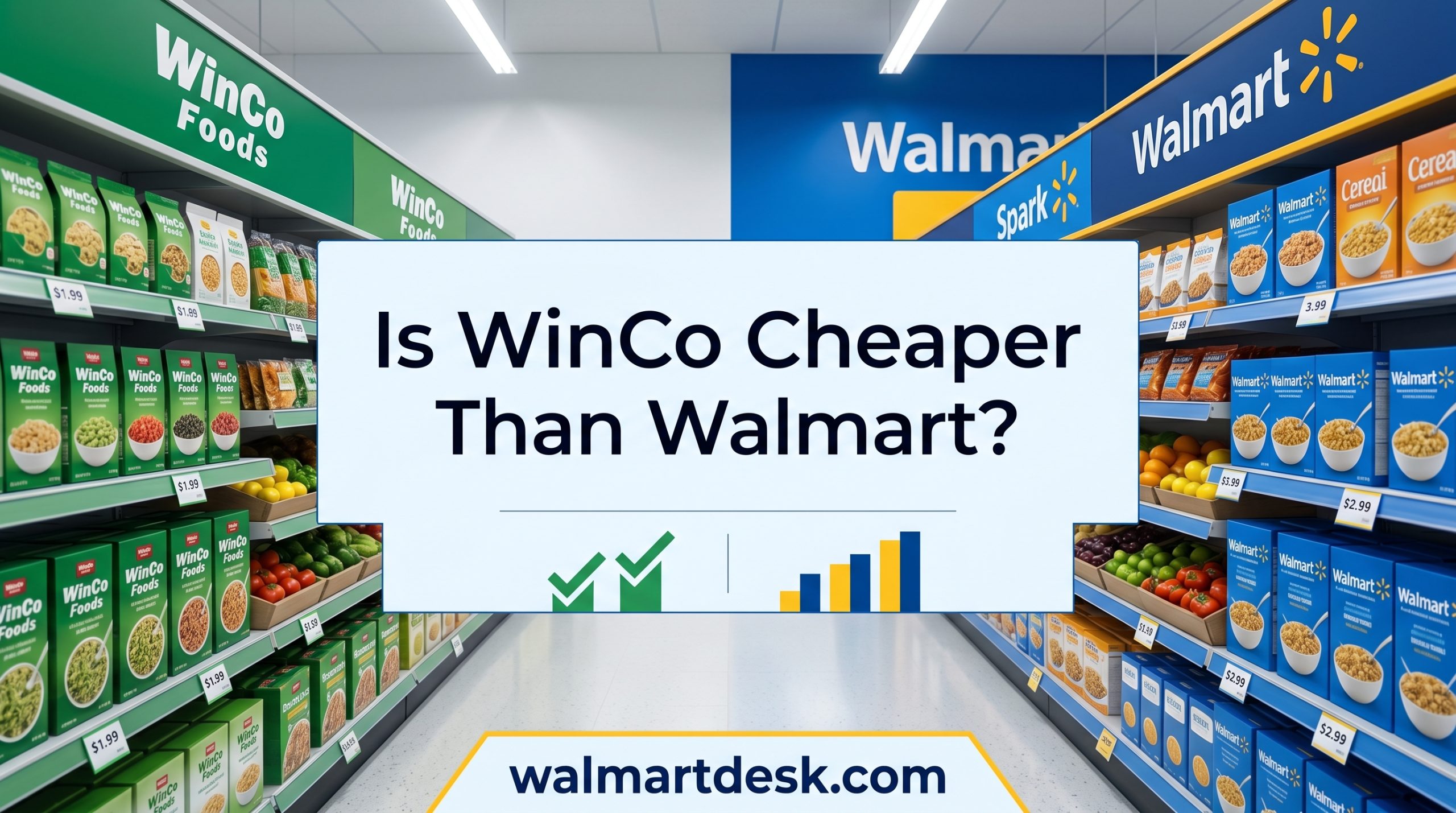
Is WinCo Cheaper Than Walmart?
When you’re trying to stretch your grocery budget, comparing stores matters.
WinCo Foods and Walmart are two of the most popular low-cost grocery chains in the United States, but they operate very differently.
Which one is cheaper depends on several factors, including where you live, what you buy, and how each store structures its pricing.
Key Highlights
- WinCo is generally cheaper on bulk items and private-label products, while Walmart wins on convenience and promotional deals.
- WinCo’s membership fee and limited store locations make it less accessible than Walmart for many shoppers.
- Your actual savings depend on shopping habits, location, and whether you prioritize bulk buying or weekly sales.
What Sets WinCo and Walmart Apart
WinCo Foods and Walmart operate on fundamentally different business models.
➤ WinCo is an employee-owned, member-based warehouse store that emphasizes bulk purchasing and private-label goods.
➤ Walmart is a traditional retailer with thousands of locations nationwide, offering everything from groceries to electronics with frequent sales and promotions.
Their different setups lead to different prices. WinCo cuts costs by having fewer stores, less brand variety, and no baggers. Walmart uses its huge network and frequent sales to keep shoppers coming back.
Price Comparison on Common Items
Walmart
- Walmart sometimes undercuts WinCo on branded products, especially during weekly sales. Walmart’s everyday prices on items like milk, eggs, and seasonal produce can be competitive, and their rollback promotions frequently beat WinCo’s regular pricing on specific products.
- Those seeking variety, brand selection, and deal-of-the-week items often find better values at Walmart.
WinCo
- WinCo typically offers lower per-unit costs on staple items like flour, rice, beans, oils, and spices. This advantage is strongest when buying larger quantities. For example, bulk pasta, canned goods, and baking supplies often cost noticeably less at WinCo.
- Shoppers buying primarily bulk staples typically save more at WinCo.
Membership and Access Costs
➤ WinCo requires a membership to shop, though it’s notably affordable. A basic membership costs around $50 annually, while a gold membership runs approximately $110 per year. These fees add to your total grocery spending and need to be factored into savings calculations.
➤ Walmart has no membership requirement. You can shop anytime without paying an annual fee, making it immediately more accessible to budget-conscious shoppers who want to avoid upfront costs.
For a WinCo membership to be worth it, you need to save at least $4 to $9 a month on groceries. People who buy in bulk regularly will likely hit that mark, but occasional shoppers might not.
Selection and Convenience
Walmart operates over 4,700 locations across the United States, including many small towns. WinCo has fewer than 150 stores, concentrated mostly in western and mountain states. This geographic advantage heavily favors Walmart for accessibility.
For shoppers prioritizing convenience and selection, Walmart is the clear winner.
For those living near WinCo locations and buying staples primarily, WinCo’s lower prices may offset the smaller selection.
Private-Label vs. Branded Products
Walmart: Branded
- Walmart also has its own store brands like Great Value, which are priced close to WinCo’s. The difference is that Walmart lets you choose between the generic or the name brand, so you have more flexibility when shopping.
WinCo: Private Labeled
- WinCo shines when it comes to its own store brands. They cover everything from canned veggies to pasta to spices, usually costing 20 to 40 percent less than name brands. The quality is good too, making them a great pick for anyone trying to save money.
If you’re willing to use exclusively store brands, WinCo often provides the lowest per-unit costs.
If you prefer mixing brands or occasionally treating yourself to specific products, Walmart’s flexibility may work better for your situation.
Bulk Buying Economics
WinCo’s bulk section is one of its defining features. You can buy exact quantities of nuts, grains, spices, dried fruits, and other items, which reduces waste and lowers per-pound costs.
This model appeals to large families, meal planners, and people managing food allergies or dietary restrictions.
Walmart offers bulk items through their regular shelves, and some select bulk bins in certain locations, but the selection is nowhere near WinCo’s level.
At Walmart, items often come in set package sizes, so if you only need a small amount, you might end up spending more than you wanted.
For households that use staples consistently, WinCo’s bulk system generates real savings. Buying a pound of oats or a specific amount of flour costs less than purchasing pre-packaged versions elsewhere.
Promotions and Weekly Sales
➤ Walmart relies on weekly ads, rollbacks, and digital coupons to bring shoppers in. They regularly run deals on seasonal items, meat, produce, and packaged goods. If you shop there often and plan around the sales, you can save a good amount of money.
➤ WinCo operates with minimal advertising and rare promotions.
Their strategy is straightforward: keep everyday prices low instead of running sales.
This approach appeals to people who dislike hunting for deals but prefer consistently lower baseline prices.
If you enjoy using coupons, tracking sales, and playing the retail game, Walmart often provides more opportunities. If you prefer simplicity and predictable pricing, WinCo’s flat-rate model is less stressful.
Produce and Fresh Items
Both stores offer produce and fresh items at competitive prices.
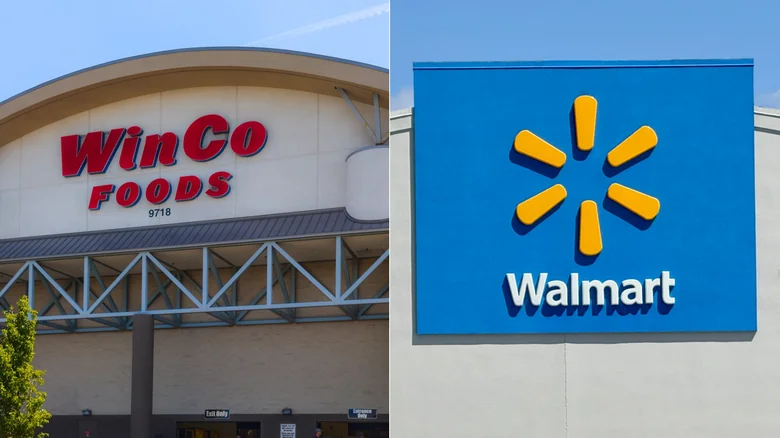
Walmart vs WinCo
Walmart’s larger selection and frequent deliveries ensure variety, especially in urban areas. WinCo’s produce is typically reasonably priced, though selection varies by location.
Meat prices at both stores are pretty similar. Walmart sometimes wins with promotions, while WinCo can be cheaper when buying in bulk. Neither one is always better than the other when it comes to fresh items.
Your local store’s management and turnover rate matter more than the chain itself for produce and meat satisfaction.
Who Benefits Most from Each Store
Both stores have their own loyal customers, but the right choice depends on your location, shopping habits, and household size.
Shop at Walmart
If you live far from WinCo, want maximum brand selection and convenience, enjoy using coupons and tracking sales, prefer shopping one store for groceries and household items, or need a quick shopping experience.
Shop at WinCo
If you live in a service area with a nearby location, buy staples and bulk items regularly, prefer consistent low prices over sales, and have a household size that uses bulk quantities efficiently.
Shop at both
If you want to maximize savings by using WinCo for staples and bulk items while catching Walmart’s rotating promotions on specific products.
Real-World Savings Estimates
Studies and shopper reports suggest that WinCo can save you 15 to 25 percent on total grocery spending if you’re a consistent bulk buyer. However, when you subtract the annual membership fee, actual savings often land in the 10 to 20 percent range for regular shoppers.
How much you save at Walmart depends on how you shop. Shoppers who actively hunt for deals and promotions can match or beat WinCo’s prices on certain items. Casual shoppers without a plan will likely spend more at Walmart.
The most realistic approach compares your actual basket at both stores. Grab a typical week’s worth of items you normally buy and price each out at both locations, accounting for WinCo’s membership cost over your expected shopping frequency.
Practical Shopping Strategies
To get the best overall prices, consider a hybrid approach.
Use WinCo for staples, bulk spices, oils, grains, and canned goods. Shop Walmart for fresh produce when it’s on sale, meat promotions, and branded items you prefer.
✦ Track your actual spending at each store for a month or two before deciding where to focus.
✦ Keep receipts and calculate per-unit prices rather than relying on gut feeling. This data-driven approach reveals which store actually saves you money based on your personal shopping patterns.
✦ Join Walmart’s digital coupon program and subscribe to their app notifications. Pair this with periodic WinCo shopping for bulk items, and you’ll get a good balance between saving money and shopping conveniently.
Geographic Considerations
If you live in Washington, Oregon, Idaho, Nevada, Utah, Arizona, or California, you have reasonable access to WinCo and can evaluate it fairly. People in other states don’t have that option, so Walmart becomes the natural choice for comparison.
Note
Regional grocery chains like Kroger, Albertsons, and Trader Joe’s also compete in different areas. Your actual cheapest option might not be WinCo or Walmart but rather a local chain with strong prices on specific items.
Evaluate all stores available in your area rather than assuming WinCo or Walmart is automatically cheapest. Many communities have regional alternatives offering competitive pricing.